
Choosing a breast pump can feel like trying to learn a new language while running on three hours of sleep. As you navigate the endless aisles of baby gear, you've likely seen the term "hospital grade" touted as the ultimate gold standard. But what does that actually mean for you and your breastfeeding journey?
Simply put, a hospital-grade breast pump is a high-powered, multi-user medical device specifically designed to initiate and maintain a milk supply when a baby cannot nurse directly. While these heavy-duty machines were once exclusive to hospital rentals, the market has evolved. Today, many "hospital-strength" portable options allow moms to get that professional-level efficiency without being tethered to a giant suitcase-sized motor.
What exactly is a hospital-grade breast pump?
In the world of lactation, "hospital grade" isn't a regulated FDA term, but it describes a specific set of high-performance features that set these pumps apart from standard personal models.
Key features of hospital-grade technology
- Closed system: this is the most critical safety feature. A physical barrier (usually a diaphragm) prevents milk and moisture from entering the pump's motor. This ensures there is no cross-contamination, making the motor safe for multiple users to share (with their own personal accessory kits).
- Superior durability: these pumps are workhorses. They are built with heavy-duty motors designed to run for thousands of hours. While a standard retail pump might lose suction after a few months of exclusive use, a hospital-grade motor is built to last for years of frequent sessions.
- Advanced suction patterns: these machines are programmed with sophisticated software that mimics a baby's natural nursing rhythm more effectively than basic models. They typically offer a wider range of vacuum strength and cycle speeds, allowing for a more customized and comfortable let-down process.
Modern solutions: the Perifit Pump
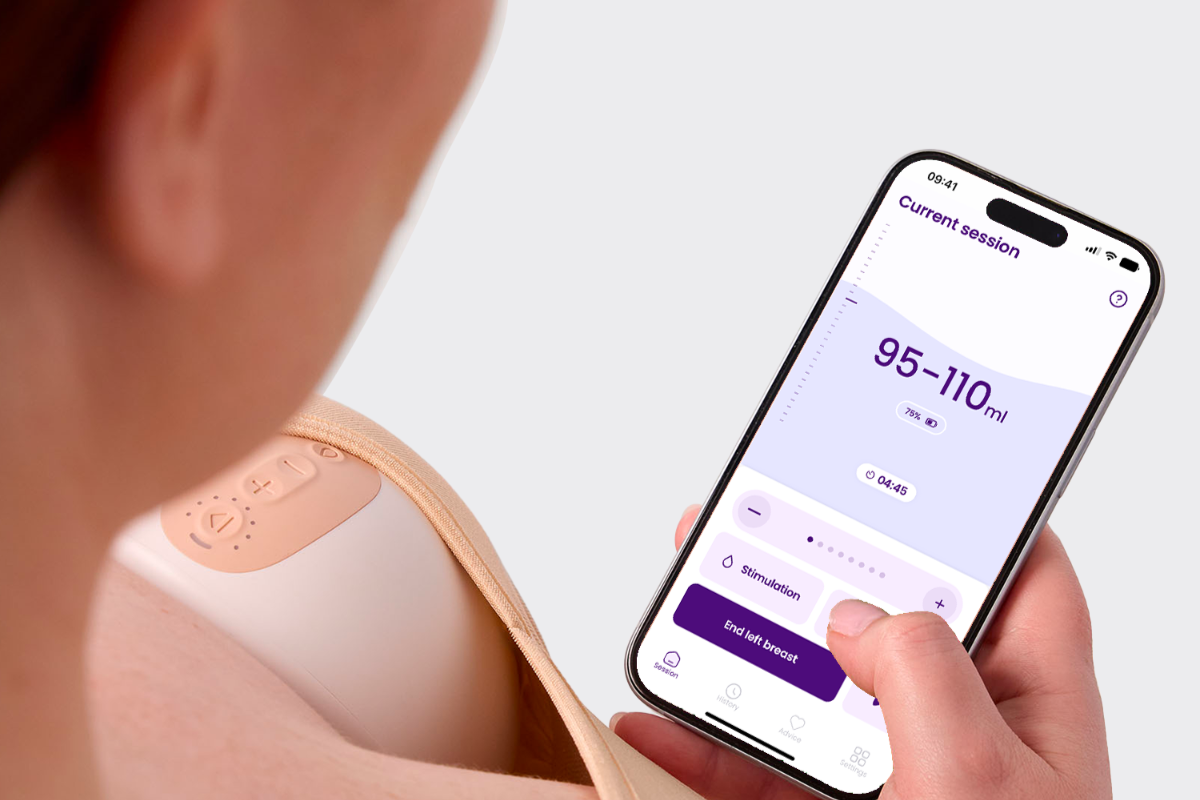
While traditional hospital pumps are bulky, modern innovation has bridged the gap. The Perifit Pump offers hospital-strength suction in a completely wearable, cordless design. It allows mothers to access that high-level efficiency and closed-system hygiene while maintaining the freedom to move — proving you don't have to sacrifice power for portability.
Hospital-grade vs. personal-use pumps: the key differences
While both types of pumps are designed to express milk, they serve very different purposes. Personal-use pumps are generally intended for healthy supplies and occasional use, whereas hospital-grade models are medical-grade powerhouses.
| Feature | Hospital-grade pump | Personal-use pump |
|---|---|---|
| Motor life | Long-term/continuous: built for multiple years of heavy, daily use. | Short-term: typically designed to last for one user over 12 to 18 months. |
| Suction strength | High/professional: offers higher cycles per minute to mimic a newborn's stimulation. | Standard: effective for maintenance, but may struggle to increase supply. |
| Portability | Limited/stationary: often heavier (though modern wearables are changing this). | High: lightweight and designed for commuting or travel. |
Who should use a hospital-grade pump?
For some families, a hospital-grade breast pump isn't just a luxury; it is a clinical necessity. Because these pumps are designed for milk initiation, they are often the primary tool used to bridge the gap when direct breastfeeding isn't immediately possible.
- Premature births: if your baby is in the NICU and cannot latch yet, you need to "mimic" a hungry infant. A hospital-grade pump provides the power pumping capability necessary to establish a full milk supply from scratch.
- Low milk supply: moms struggling with low production often turn to these pumps to stimulate breast tissue more effectively than a standard retail unit can, helping to "signal" the body to produce more milk.
- Multiples: if you are a mother of twins or triplets, the demand on your body is doubled or tripled. The efficiency and durability of a hospital-grade motor are essential for the frequent pumping sessions required to feed multiple babies.
- Medical necessity: in cases where a baby has a cleft palate, neurological challenges, or severe latching issues, the pump becomes the sole source of milk expression. In these instances, the sophisticated suction patterns ensure the mother can provide breast milk long-term without her supply dipping.
How to get a hospital-grade pump in the US
Navigating the American healthcare system can be tricky, but getting the right equipment doesn't have to be. If you've decided that hospital-strength performance is what you need, there are two primary paths to bringing one home.
Rental programs
Most hospitals and Durable Medical Equipment (DME) providers offer rental programs for hospital-grade breast pump models. Because these machines are designed for multiple users and cost thousands of dollars to buy, renting is the standard approach. You typically pay a monthly fee (ranging from $50 to $90) and purchase a one-time personal accessory kit to ensure total hygiene.
Insurance coverage
Under the Affordable Care Act (ACA), most insurance plans are required to cover a breast pump. A standard personal pump is often covered at 100%, while hospital-grade rentals may require a Letter of Medical Necessity from your doctor or pediatrician — explaining why a standard pump isn't sufficient, such as in cases of premature birth or a medical latch issue.
💡 The Perifit Pump may be eligible for insurance coverage through our dedicated insurance verification program. You can apply for your breast pump through insurance directly on our website to find out what your plan covers. Coverage varies by plan, and any remaining out-of-pocket costs can often be covered using your FSA or HSA funds.
Buying vs. renting
- Rent if you need a specialized machine for a short period to boost a low supply or manage a NICU stay.
- Buy (or get through insurance) a hospital-strength wearable like the Perifit Pump if you want a permanent solution that balances professional power with the lifestyle of a busy, mobile mom.
Can I travel with a hospital-grade breast pump?
Many moms worry that high-powered equipment will be a headache at the airport, but you can absolutely fly with a pump. In the eyes of the TSA, a breast pump is considered a medical device.
This means your pump does not count as a carry-on bag on most major airlines. You are allowed to carry it in its own dedicated bag in addition to your standard luggage. For those using the Perifit Pump, travel is even easier: its compact, cordless design is perfectly safe for travel and fits easily into a purse or diaper bag.
💡 Always inform the TSA agent that you are carrying a breast pump before your bags go through the X-ray. If you are carrying expressed milk, it is exempt from the 3-1-1 liquid rule, but be prepared for it to undergo additional screening.
Can a hospital-grade breast pump cause breast pain?
A common misconception is that higher suction equals more milk, which leads some parents to crank their pump to the highest setting. However, it is vital to remember: pumping is not supposed to hurt.
While a hospital-grade pump has a more powerful motor, it shouldn't cause pain if used correctly. In fact, because these pumps offer more refined suction patterns and adjustable settings, they are often more comfortable than cheaper retail models. If you experience discomfort, it is usually due to:
- Incorrect flange size: if the breast shield is too small or too large, it can cause friction and bruising.
- Vacuum intensity: setting the suction too high can cause nipple trauma. You should pump at your "Maximum Comfort Vacuum" — the highest setting that still feels comfortable.
- Elastic nipples: some skin types stretch more than others, requiring specific silicone inserts for comfort.
If you feel sharp pain or see damage, stop and consult a lactation consultant. The goal of a hospital-strength motor is efficiency, not intensity.
Is a hospital-grade breast pump noisy?
In the past, "hospital grade" was synonymous with a loud, rhythmic "whoosh-clunk" that could be heard from the next room. Traditional rental units are often bulky and prioritize motor durability over silence, which can be a drawback for late-night sessions or pumping during work calls.
However, modern engineering has changed the game. The Perifit Pump provides that sought-after hospital-strength suction while remaining incredibly quiet. Its discreet design allows you to pump in public, in the office, or right next to a sleeping baby without the distracting noise of a traditional medical motor. You no longer have to choose between a powerful motor and a quiet environment.
Navigating the world of lactation is a journey of finding the right tools for your unique body. A hospital-grade breast pump stands out as the ultimate resource for initiating milk supply, overcoming medical challenges, or supporting multiples. Whether you opt for a traditional hospital rental for a short-term boost or a quiet, insurance-eligible wearable like the Perifit Pump for long-term freedom, remember that pumping is not supposed to hurt. With the right technology and proper fit, you can achieve maximum output with maximum comfort.
Sources: