You don't need a gym, weights, or an hour to spare. One position, held with intention, works more of your body than most exercises twice as complex. The plank has earned its place in every smart training routine — and once you understand exactly what it's doing for you, it becomes a lot easier to do it consistently.
We will break down every muscle the plank targets, how to do it correctly, the best variations for your goals, and how to adapt it to wherever you are in life — whether you're just starting out, rebuilding postpartum, or training through menopause.
The primary muscles targeted
The plank looks deceptively simple — but the moment you hold the position correctly, you realize how many muscles are quietly working to keep you there. Here's exactly what's firing, layer by layer.
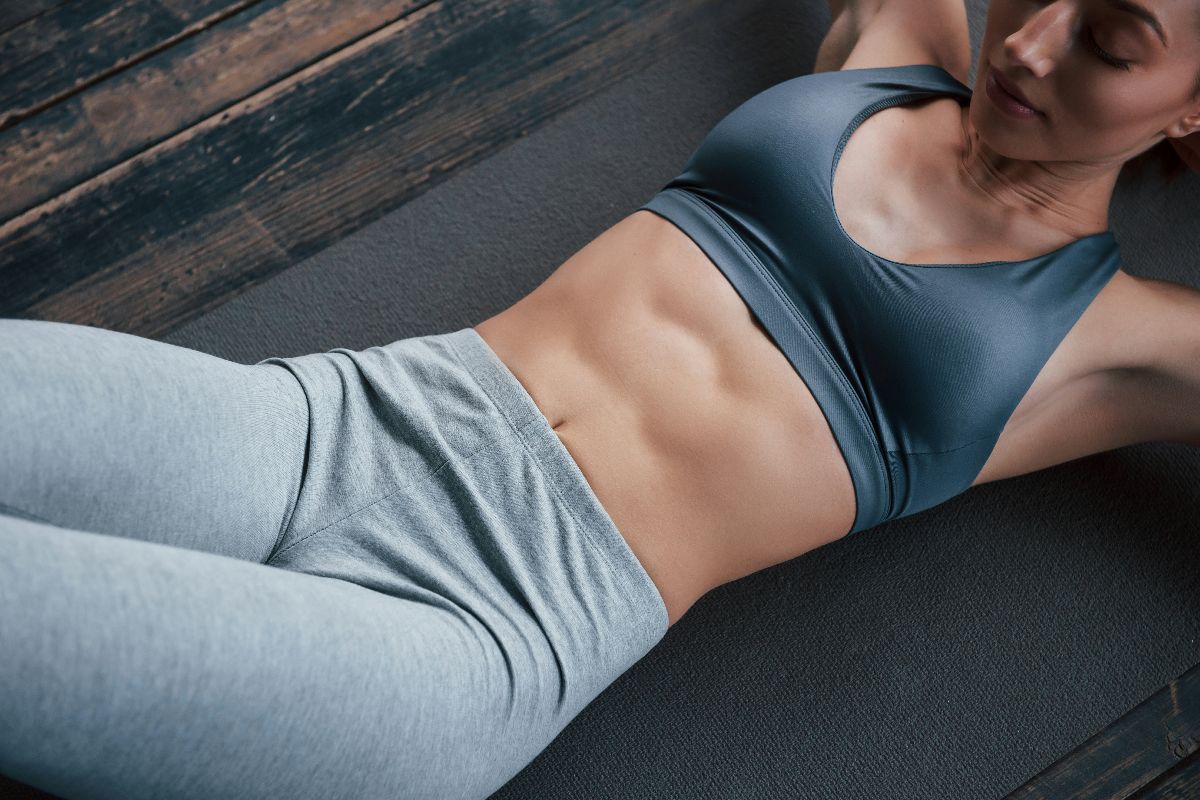
Rectus abdominis
The long vertical muscle running down the front of your abdomen. During a plank, it contracts isometrically — without moving — to keep your torso flat and prevent your lower back from sagging.
Transverse abdominis
The deepest layer of the abdominal wall, wrapping around your core like a natural corset. This is one of the primary muscles activated during a plank. It compresses the abdomen and stabilizes the spine and pelvis — making planks an effective exercise for building true deep core strength. For women, this is especially relevant after pregnancy, when the TVA is often weakened or overstretched.
Obliques
The internal and external obliques run diagonally along the sides of your torso. In a standard plank, they fire continuously to resist rotation and keep your hips level. In a side plank, they become the primary mover.
Secondary muscles involved
The core does the heavy lifting in a plank — but it doesn't work alone. Several other muscle groups contribute to holding the position correctly, and training them together is part of what makes the plank so time-efficient.
Upper body
In a high plank, the chest, anterior deltoids, triceps, and serratus anterior all engage to support your upper body weight and stabilize the shoulder blades.
Lower body & glutes
The glutes keep your hips level; the quadriceps prevent the legs from buckling. These muscles don't move — they brace, creating stability rather than movement, which is essential for functional strength.
Back
The erector spinae maintains spinal alignment throughout the hold. The rhomboids and lower trapezius stabilize the shoulder blades. Together, they make the plank as much a posterior chain exercise as an abdominal one.
Does planking improve posture and spinal health?
Hours of sitting weaken the muscles designed to hold you upright. The TVA and erector spinae — both heavily recruited during a plank — directly counter this pattern by supporting the lumbar spine and maintaining its natural curves.
For women who carry young children on one side, planks build the bilateral strength needed to absorb asymmetrical load more evenly. Lower back pain is one of the most common complaints among women of all ages; a consistent plank practice addresses one of its root causes rather than just managing symptoms.
Good spinal alignment also affects breathing mechanics and pelvic floor function. When the ribcage stays stacked over the pelvis — the position actively maintained in a plank — the diaphragm and pelvic floor can work together as designed.
How do planks support women during different life stages?
Whether you're brand new to exercise, navigating pregnancy, or rebuilding after birth, the plank can be adapted to meet your body exactly where it is.
- Beginners: start with a wall or kneeling plank. Even 10 to 20 seconds with correct form delivers real benefit — the priority is learning the pattern before building duration.
- During pregnancy (with provider approval): planks support posture as the center of gravity shifts and reduce lower back strain. As pregnancy progresses, incline planks on a bench or countertop keep the movement safe by reducing abdominal pressure.
- Postpartum: reconnect with the TVA through breathing exercises before loading it with a plank. Women with diastasis recti need a modified progression — a pelvic floor physical therapist can guide the appropriate timeline.
- Perimenopause / menopause: declining estrogen accelerates muscle and bone loss. Planks maintain the deep postural muscles that protect the spine and pelvis, improve balance, and scale easily — no equipment needed.
How to do a plank correctly
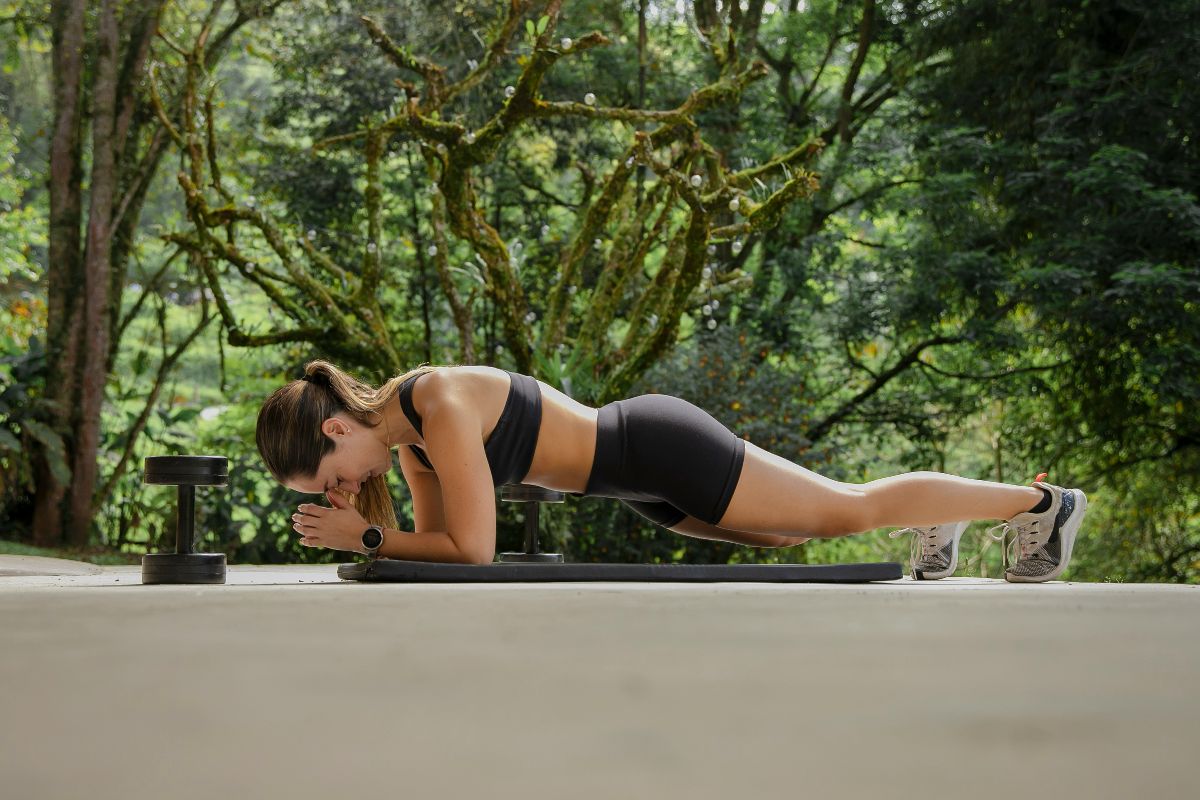
Good form is what separates a plank that builds strength from one that strains your lower back or wrists. The position is simple — the details are what make it effective.
- Forearms or hands directly under your shoulders
- Head, shoulders, hips, and heels in one straight line — nothing piking or sagging
- Engage your abs gently — brace, don't hollow
- Squeeze your glutes lightly to keep the pelvis neutral
- Ribs stacked over pelvis — avoid flaring the front ribs outward
- Breathe normally — inhale through the nose, exhale slowly through the mouth
💡 Multiple shorter holds (3 × 10 to 20 seconds) are just as effective for core activation as one long plank — and far less likely to trigger form breakdown as fatigue sets in.
Plank exercises for women: the best variations for every goal
Once you've built a solid foundation, variations let you shift the emphasis, increase the challenge, or adapt the exercise to where your body is right now. Here are the five most useful ones for women.
| Variation | Primary muscles | Level | Best for | Avoid if |
|---|---|---|---|---|
| Standard plank | TVA, rectus abdominis, obliques | All levels | Full core foundation | Unresolved diastasis recti |
| Side plank | Obliques, hip abductors | Beginner+ | Lateral stability | Hip or shoulder pain |
| Reverse plank | Hamstrings, glutes, erector spinae | Intermediate | Posterior chain balance | Wrist or shoulder pain |
| Plank jacks | Full core (dynamic) | Intermediate+ | Cardio + reactive bracing | Pelvic floor symptoms, prolapse |
| Knee plank | TVA, glutes (reduced load) | Beginner / postpartum | Safe entry point | — |
| Elevated plank | Full core (lighter load) | Beginner / pregnancy | Low-load alignment work | — |
How long should women hold a plank?
Long enough to challenge your muscles — while maintaining proper alignment and breathing control. A sagging plank held for 60 seconds trains compensation, not strength.
- Beginners / early postpartum: 3 × 10 to 20 seconds
- Intermediate: 3 × 20 to 45 seconds
- Advanced: 3 × 45 to 60 seconds, or progress to a harder variation
💡 If you notice breath-holding, bearing down, or pelvic pressure during a hold, rest and reset. Your pelvic floor fatigues independently from your superficial abs — and it's the first signal worth listening to.
When Should Women Be Careful With Planks?
Planks are broadly safe and adaptable — but a few situations call for a modified approach or professional guidance before loading the core. If any of the following applies to you, it's worth slowing down rather than pushing through.
- Postpartum women with unresolved core weakness: rebuild the TVA and pelvic floor progressively before loading with a full plank. Starting too early reinforces compensation patterns that become harder to undo.
- Women with diastasis recti: standard planks can increase tension along the midline. If you notice coning or doming during a hold, stop and consult a specialist.
- Women with prolapse or urinary leakage: leaking during a plank is common — but not something to accept as normal. The Perifit Kegel Trainer Care or Care+ train reflexive pelvic floor contraction under load. Its Practice Lab shows in real time whether your pelvic floor is bracing or collapsing during effort, so you can correct the pattern before symptoms become a barrier to exercise.
- Anyone with wrist, shoulder, or lower back pain: switch to a forearm plank for wrist issues. Lower back pain during a plank almost always points to form — check alignment before continuing.
- Women with significant abdominal doming or coning during core work: this may indicate poor pressure management or unresolved diastasis.
How can the Perifit Kegel Trainer help you engage the right muscles during planks?
A plank demands coordinated effort between the deep core and the pelvic floor. During the hold, intra-abdominal pressure rises — and ideally, the pelvic floor contracts reflexively to manage it from below. When it doesn't, symptoms like leaking or pelvic pressure can follow.
Most women have no way of knowing, in real time, whether that coordination is actually happening.
The Perifit Kegel Trainer's Practice Lab makes it visible. Its two sensors track pelvic floor activation and intra-abdominal pressure simultaneously — the goal being to raise the pelvic floor signal (green line) while keeping the pressure signal low (red line). Used alongside planks, it tells you whether your pelvic floor is rising to meet the challenge or being pushed down by it.
For women rebuilding postpartum, it's also a way to confirm readiness before progressing to full planks — rather than discovering limits through symptoms.

The plank works because it asks your whole body to hold still under load — and that's harder than it sounds. From the transverse abdominis to the glutes, from the erector spinae to the pelvic floor, every muscle involved has a role in keeping you stable, upright, and pain-free in daily life.
What makes it especially valuable for women is its adaptability. It meets you where you are — whether that's a wall plank at six weeks postpartum or a side plank in your forties — and grows with you. The goal was never a perfect 60-second hold. It's a strong, coordinated core that supports you well beyond the workout.
Sources: